

Product Categories
- > Digital Textile Printer
-
- Fedar Sublimation Textile Printer
FEDAR FD61916E Sublimation Printer FEDAR FD1924 Sublimation Printer FEDAR FD1912S Sublimation Printer FEDAR FD61915E-A Sublimation Printer FEDAR FD5198E Sublimation Printer FEDAR FD51915E Sublimation Printer FEDAR FD53215E Sublimation Printer FEDAR FD61915E Sublimation Printer FD6198E 8 Heads Printer FD6194E 4 Heads Printer FD5194E 4 Heads Printer FD5328E 3.2m Printer FD5193E 3 Heads Printer FD5268E 2.6m Printer FD1900 2 Heads Printer
- Fedar DTF Printer
FD11308 DTF Printer FD1808 DTF Printer FDA3 Pro DTF Printer A3 DTF Printer FDA3 DTF Printer FD70-5 DTF Printer FD60 DTF Printer FD70-4 DTF Printer
- Aulane DTF Printer
Aulane AL2808 DTF Printer Aulane AL2606 DTF Printer Aulane AL2604 DTF Printer Aulane AL2602 DTF Printer Aulane AL2302 DTF Printer Aulane AL2301 DTF Printer
- Fedar Sublimation Textile Printer
Digital Printing VS Reactive Printing
2025-09-04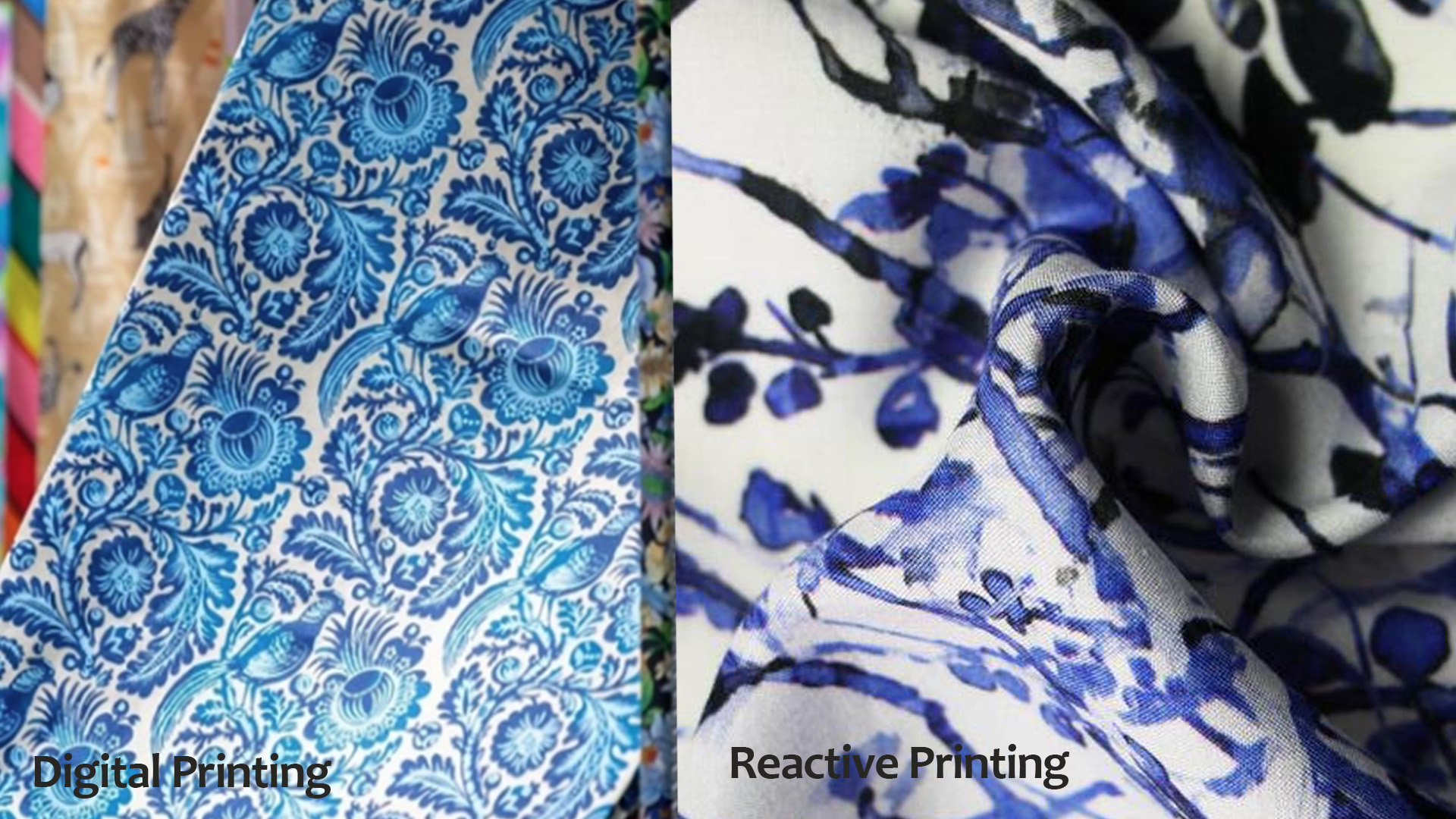
Process Characteristics
Digital Printing: Utilizes computer-controlled print heads to directly spray dye ink onto fabrics, eliminating the need for engraving. It enables complex patterns and high-precision printing, making it suitable for small-batch customization and personalized demands.
Reactive Printing: Involves a chemical reaction between reactive dyes and fibers for color fixation. It requires engraving (e.g., rotary or flat screen printing) and has a relatively complex process. However, it offers high color fastness and is suitable for mass production.
Cost and Efficiency
Digital Printing: Higher cost for small-batch production, but the cost gradually decreases as order volumes increase. Sampling is fast (typically around 3 days), making it ideal for quickly responding to market demands.
Reactive Printing: Lower cost for mass production, but engraving expenses are high, and the sampling cycle is long (approximately 15-20 days). It is suitable for large-scale production of fixed patterns.
Environmental Friendliness
Digital Printing: Uses eco-friendly inks, produces no excess paste or wastewater pollution, and meets environmental standards.
Reactive Printing: Traditional processes may generate wastewater and excess paste, requiring attention to environmental treatment.
Applicable Scenarios
Digital Printing: Suitable for small-batch, personalized orders, such as customized apparel, home goods, and souvenirs.
Reactive Printing: Suitable for large-batch production of fixed patterns, such as regular apparel and home textiles.
Conclusion: If flexibility, personalization, and small-batch production are priorities, digital printing is superior. If low-cost mass production is the goal, reactive printing holds the advantage. Companies can choose the appropriate process based on order scale, pattern complexity, and environmental requirements.