

Product Categories
- > Digital Textile Printer
-
- Fedar Sublimation Textile Printer
FEDAR FD61916E Sublimation Printer FEDAR FD1924 Sublimation Printer FEDAR FD1912S Sublimation Printer FEDAR FD61915E-A Sublimation Printer FEDAR FD5198E Sublimation Printer FEDAR FD51915E Sublimation Printer FEDAR FD53215E Sublimation Printer FEDAR FD61915E Sublimation Printer FD6198E 8 Heads Printer FD6194E 4 Heads Printer FD5194E 4 Heads Printer FD5328E 3.2m Printer FD5193E 3 Heads Printer FD5268E 2.6m Printer FD1900 2 Heads Printer
- Fedar DTF Printer
FD11308 DTF Printer FD1808 DTF Printer FDA3 Pro DTF Printer A3 DTF Printer FDA3 DTF Printer FD70-5 DTF Printer FD60 DTF Printer FD70-4 DTF Printer
- Aulane DTF Printer
Aulane AL2808 DTF Printer Aulane AL2606 DTF Printer Aulane AL2604 DTF Printer Aulane AL2602 DTF Printer Aulane AL2302 DTF Printer Aulane AL2301 DTF Printer
- Fedar Sublimation Textile Printer
5 Essential DTF Printing Processes That Make Fedar DTF Printer Stand Out
2026-05-25Process 1: Precision Film Printing with White Ink Base
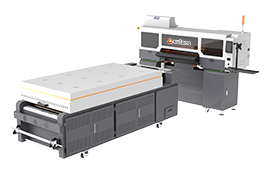
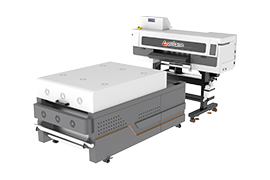
The first step is printing your design onto a PET film using a Fedar DTF printer. Unlike standard inkjet printing, DTF requires a white ink underbase (CMYK+W) to ensure opacity on dark fabrics. The Fedar DTF printer uses original Epson printheads to deposit ink droplets with exceptional accuracy. The white layer is printed first, followed by color layers. Proper white ink circulation prevents sedimentation and clogging – a feature built into Fedar machines.
Key quality check: After printing, hold the film against light. The white ink should be dense and even, with no pinholes.
Process 2: Uniform Hot-Melt Powder Application
Once the design is printed, a hot-melt adhesive powder is applied evenly over the wet ink. This powder will later bond the ink to the fabric. The Fedar DTF printer workflow includes a powder shaker or manual application step. Even distribution is critical: too little powder causes poor adhesion; too much creates a thick, stiff hand feel. For elastic fabrics (sportswear, leggings), use anti-stretch powder; for dark garments, anti-sublimation powder prevents dye migration.
Pro tip: Always use powder with the correct particle size (80-170μm for soft feel, 120-250μm for coarse fabrics).
Process 3: Controlled Curing (Fusing the Adhesive)
After powder application, the film passes through a curing oven or heat tunnel. This step melts the powder into a uniform adhesive layer. Temperature and time are critical – typically 160-170°C for 2-3 minutes. The Fedar DTF printer ecosystem includes compatible curing units. Over-curing makes the adhesive brittle; under-curing leaves the powder unstuck. Proper curing results in a flexible, clear adhesive film that will transfer cleanly.
Check: After curing, the powder should be fully melted and form a continuous layer that is not sticky to the touch.
Process 4: Heat Press Transfer
The cured film is placed onto the garment (cotton, polyester, blends, etc.) and pressed using a heat press – not the printer itself. The heat press activates the adhesive: typical settings are 150-170°C for 15-20 seconds with medium pressure. The Fedar DTF printer is designed to work seamlessly with standard heat presses. The transfer must be done while the adhesive is still hot; cold peel or hot peel depends on the powder type.
Important: Use a silicone sheet or Teflon cover to protect the design during pressing.
Process 5: Peeling & Post-Curing
After pressing, the film is peeled away. There are two methods:
Hot peel: Remove the film immediately after pressing (seconds later). This gives a matte finish.
Cold peel: Let the garment cool completely (30-60 seconds) before peeling. This produces a glossier finish and higher adhesion.
Some powders require a post-curing step: a quick second press (without film) for 5-10 seconds to lock the color and improve wash fastness. The Fedar DTF printer workflow recommends testing both methods for your specific fabric.
Why Fedar DTF Printer Excels in These Five Processes
Reliable white ink circulation prevents clogs during long runs.
Epson printheads ensure sharp dots and smooth gradients.
User-friendly RIP software (compatible with Maintop, Fiery, FlexiPRINT) simplifies color management.
Automatic cleaning reduces manual intervention.
Field-proven durability – prints withstand 50+ washes at level 4-5 fastness.
Conclusion
Mastering these five DTF printing processes – precision film printing, powder application, curing, heat press transfer, and peeling/post-curing – is the key to professional results. With a Fedar DTF printer, you get a system engineered to handle each step reliably, from small-batch custom T-shirts to high-volume sportswear orders. Invest in a Fedar DTF printer and elevate your custom apparel business.